

A Professional Explanation for Why Smells Keep Coming Back
In discussions about household odors, the focus is often misplaced.
People tend to blame insufficient cleaning, poor ventilation, or the lack of fragrance.
From a professional hygiene and microbiology perspective, however, persistent odors are rarely a surface problem.
They are almost always the result of ongoing microbial activity — most commonly, mold.
Odor is not the issue itself.
It is a signal.
Why mold produces odor in the first place
Mold is a living organism.
As it grows in damp environments, it breaks down organic material and releases volatile organic compounds (VOCs) as metabolic by-products.
These compounds are what we recognize as:
-
Musty smells
-
Sour or damp odors
-
“Old water” or stale air
Importantly, these smells do not indicate dirt alone.
They indicate active biological processes.
As long as mold remains alive and undisturbed, odor production continues.
Masking odor does not stop the source
Many common cleaning habits focus on neutralizing smell rather than addressing its origin:
-
Adding fragrance
-
Increasing detergent dosage
-
Using air fresheners or deodorizing sprays
While these methods may provide short-term relief, they do not affect mold growth itself.
This is why odors often:
-
Fade briefly
-
Return within days or weeks
-
Become more persistent over time
Without disrupting mold at its source, odor control is temporary by nature.
Where mold typically hides
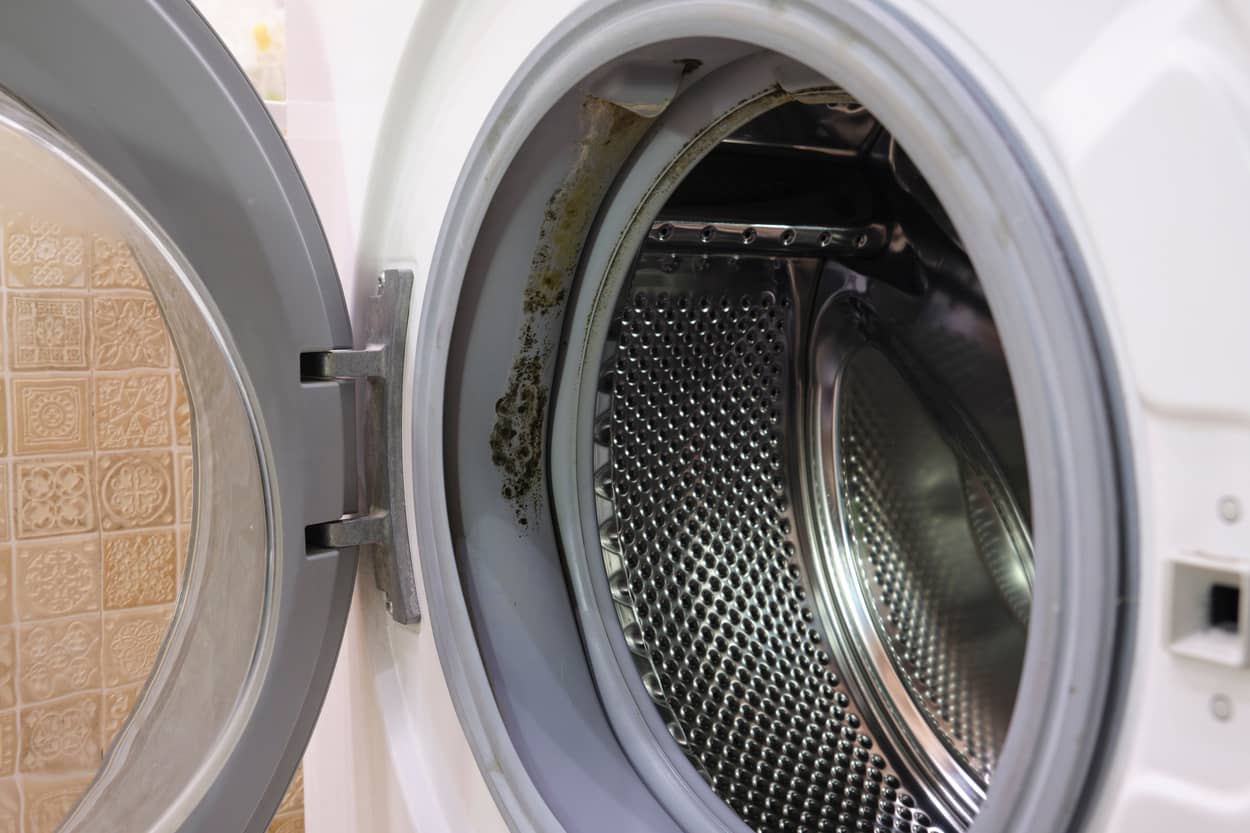
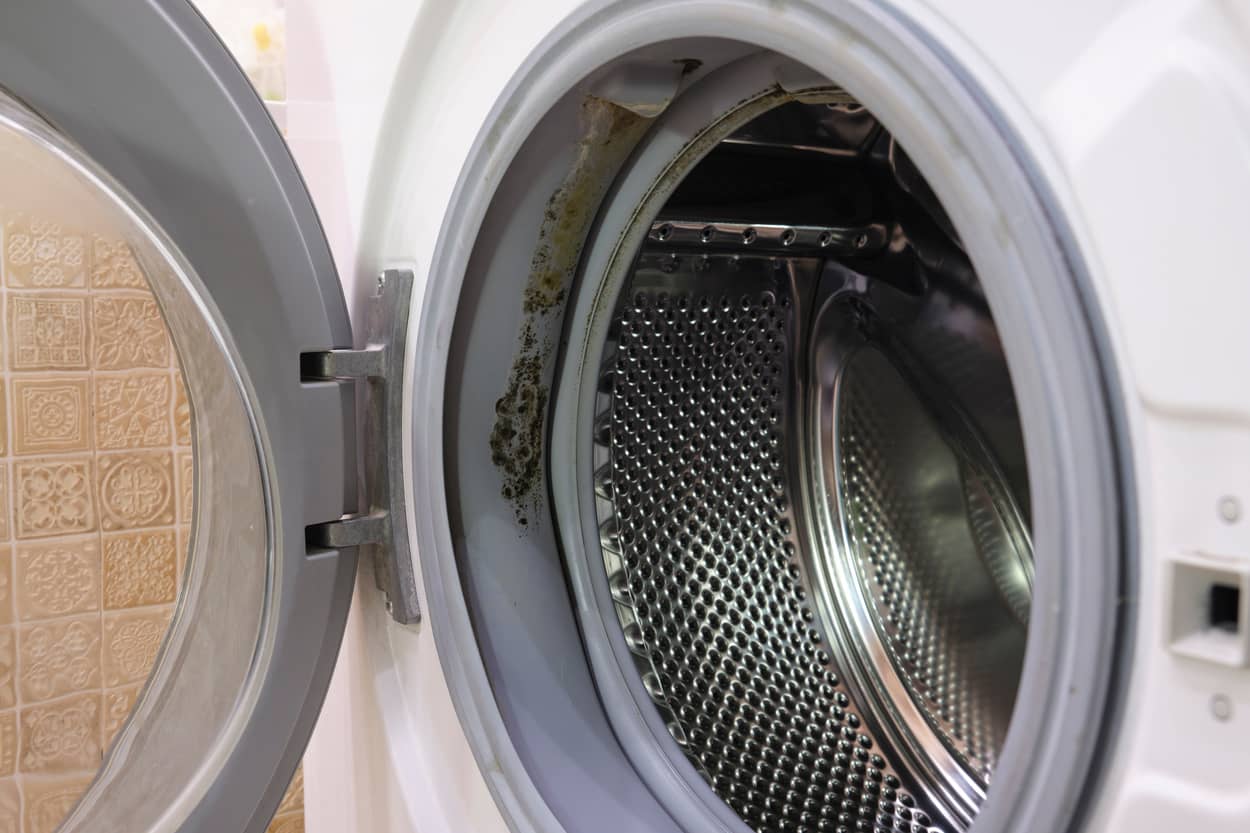
One of the reasons mold-related odors are so difficult to eliminate is that mold rarely grows in obvious places.
In household environments, it commonly develops in areas that combine:
moisture, limited airflow, and low cleaning access.
Examples include:
-
Washing machine inner structures and rubber door seals
-
Bathroom grout lines and wall joints
-
Drain systems and pipe connections
-
Enclosed spaces that remain damp after use
These locations allow mold to grow undetected for long periods, producing odor continuously.
Why odors feel “impossible” to remove
From a professional standpoint, recurring odor indicates one of two things:
-
Mold was never fully removed
-
The environment still supports mold regrowth
Surface cleanliness alone is not enough.
If moisture, residue, and poor ventilation remain, mold will return — and so will the smell.
This is why some homes feel clean but never truly smell fresh.
The professional approach to odor elimination
In professional cleaning and hygiene management, odor is treated as a secondary symptom, not the primary target.
Effective odor control focuses on:
-
Eliminating mold at the structural level
-
Reaching areas that routine cleaning cannot
-
Reducing moisture and residue that enable regrowth
Only when mold activity is interrupted does odor stop returning.
Final perspective
Odor is not random, and it is not inevitable.
It is a biological indicator.
When smells persist despite repeated cleaning, the message is clear:
mold is present, active, and largely unseen.
Understanding this distinction — between covering odor and resolving its cause — is the first step toward lasting cleanliness.
If you’ve ever wondered why a space never truly smells clean, no matter how often it’s cleaned, the answer is rarely fragrance.
It’s biology.


แบ่งปัน:
The History of Toilet Cleaners: From Ancient Sponges to Smart Toilets